
Introducing a New Field:
Constitutional Psychology
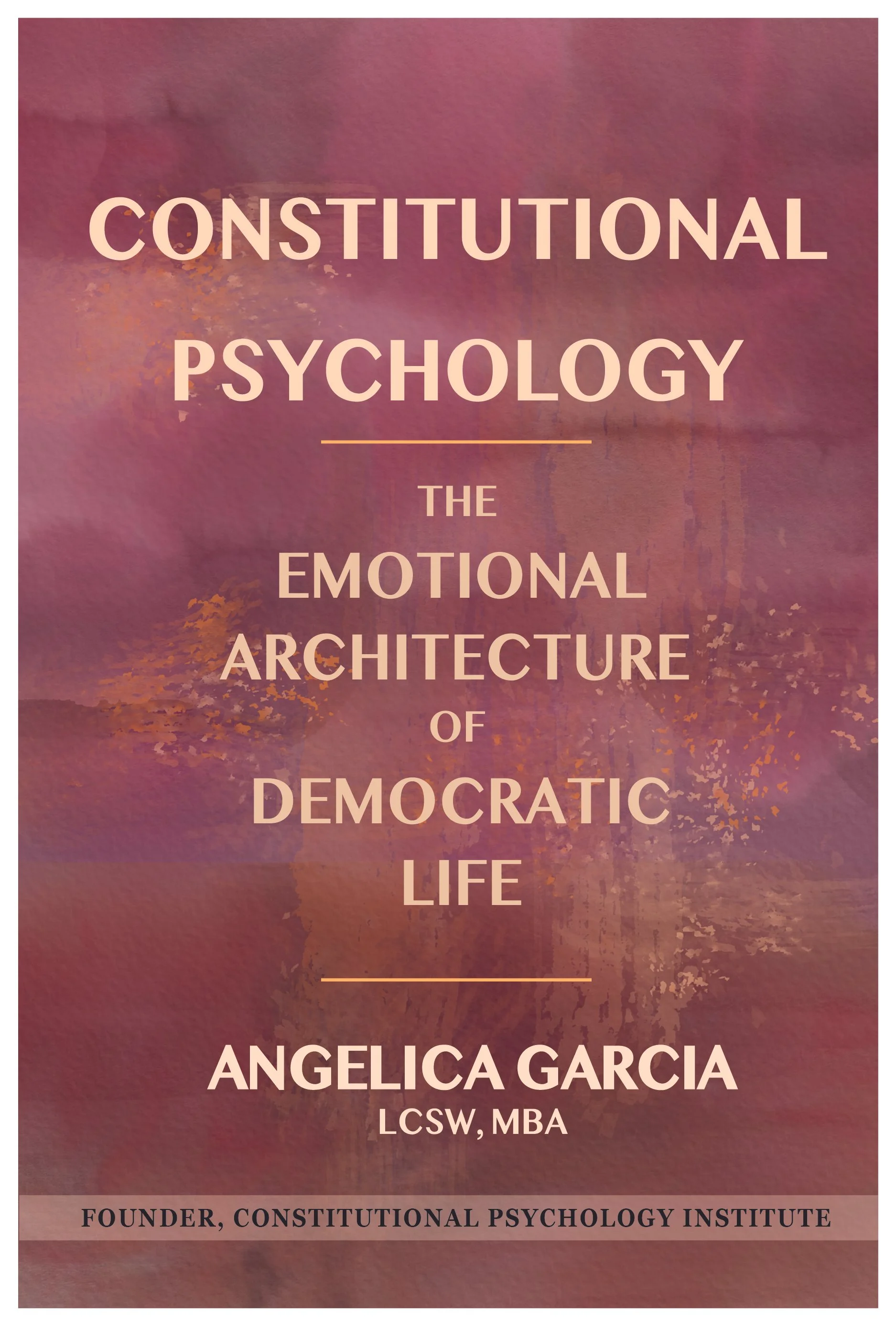
What is Constitutional Psychology?
Constitutional Psychology is a new discipline that explores how emotional safety, identity, attachment, and belonging shape our inner world and our civic world at the same time. It examines how personal wounds, relational patterns, and cultural narratives become the emotional “constitution” we carry inside us — influencing how we love, protect, defend, withdraw, connect, and participate in society.
It offers a language for:
Why certain conflicts feel personal
Why belonging can feel fragile
Why identity becomes protective
Why civic life often mirrors family life
Why emotional safety is foundational to resilience and repair
Constitutional Psychology helps people understand themselves not only as individuals, but as participants in a larger emotional ecosystem.
Founder
Angelica Garcia, LCSW, MBA
Founder of Constitutional Psychology
Angelica Garcia is the creator of Constitutional Psychology, a new discipline born from an urgent truth: people are experiencing emotional, relational, and identity‑level harm as their constitutional landscape shifts — and no existing field has the language or tools to name, hold, or repair that harm.
Her work sits at the intersection of clinical practice, systems thinking, democratic repair, and meaning‑making. As a clinician and systems architect, she has spent more than a decade helping individuals and communities navigate trauma, identity rupture, relational breakdown, and the search for coherence. Constitutional Psychology emerged from this frontline work — from witnessing how constitutional abandonment, democratic grief, institutional betrayal, and civic disorientation show up in the body long before they appear in public behavior.
Garcia’s central insight is both simple and transformative: the Constitution functions as a psychological relationship. It shapes belonging, safety, dignity, and recognition. When that relationship fractures, people experience real emotional harm. And like any relationship, it can be understood, tended to, and repaired.
Her approach is non‑partisan and structural, grounded in constitutional mechanisms, emotional literacy, and the lived experiences of people navigating a rapidly changing democratic environment. Through Constitutional Psychology, Garcia offers a new emotional grammar for democratic life — one capable of restoring coherence, rebuilding trust, and helping people feel at home in their country and in themselves.